
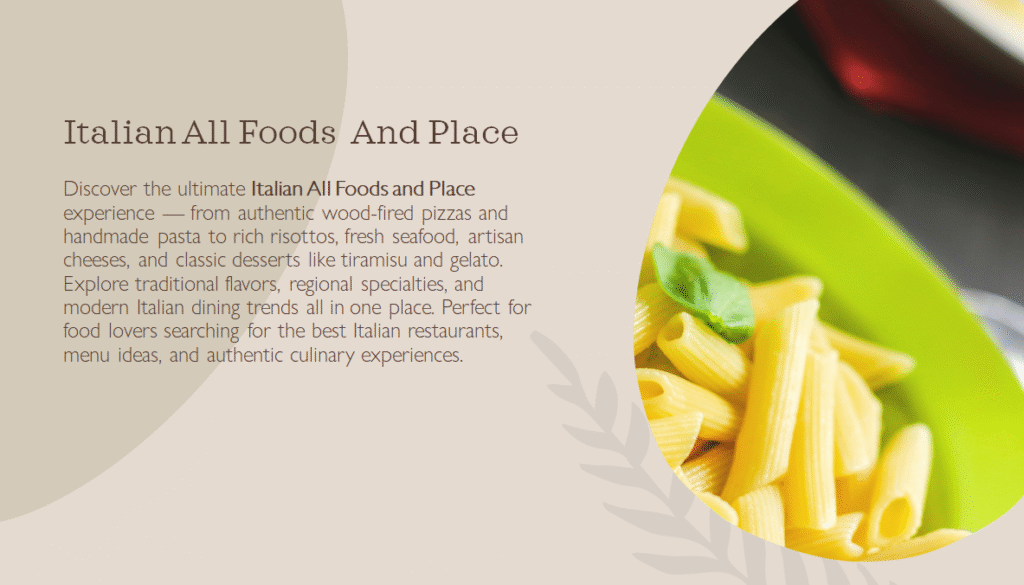
Italian All Foods – A Complete Journey Through Italy’s Culinary Soul
Italian All Foods And Place
Italian All Foods And Place, Italian food is more than pizza and pasta. It is history served on a plate, geography expressed in flavor, and family traditions passed from one generation to the next. From the snowy Alps in the north to the sun-kissed shores of Sicily in the south, every region of Italy offers its own identity, ingredients, and cooking techniques.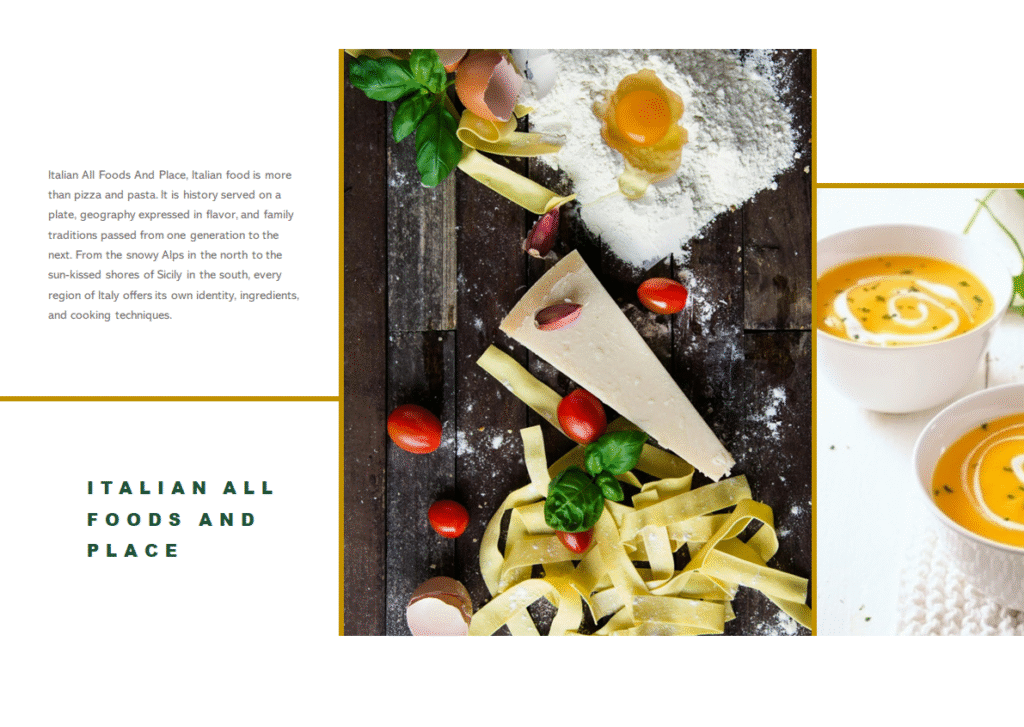
In this original, detailed guide, we will explore Italian cuisine from north to south—covering classic dishes, regional specialties, breads, cheeses, desserts, street foods, drinks, and food culture. This is a complete journey into “Italian All Foods” in a fresh and unique way, Italian All Foods And Place.
1. The Philosophy of Italian Cuisine
Italian All Foods And Place, Italian cooking is built on simplicity and quality. Instead of complicated spices or heavy sauces, Italian chefs focus on:
-
Fresh seasonal ingredients
-
Local produce
-
Simple preparation
-
Respect for tradition
-
Balance of flavors
The heart of Italian cuisine lies in family. Recipes are often handwritten, preserved, and perfected for decades. Meals are slow, social, and meaningful.
2. Regional Diversity of Italian Food
Italy is divided into 20 regions, and each one has its own food culture. Geography plays a major role, Italian All Foods And Place.
Northern Italy
Regions like Lombardy, Piedmont, and Veneto are influenced by mountains and colder climates. Butter, rice, polenta, and rich sauces are common.
Central Italy
Tuscany, Umbria, and Lazio emphasize olive oil, grilled meats, beans, and rustic breads.
Southern Italy
Campania, Calabria, and Sicily are famous for tomatoes, seafood, citrus fruits, and bold flavors.
3. Italian Breakfast (Colazione)
Italian All Foods And Place, Italian breakfast is light and sweet. Unlike heavy breakfasts in other countries, Italians prefer:
-
Espresso or cappuccino
-
Cornetto (Italian croissant)
-
Biscotti
-
Fresh fruit
Coffee culture is important. Italians usually drink cappuccino only in the morning and espresso throughout the day.
4. Antipasti – The Beginning of Flavor
Antipasti means “before the meal.” It prepares the appetite.
Common antipasti include:
-
Bruschetta with tomatoes and basil
-
Prosciutto and melon
-
Caprese salad
-
Marinated olives
-
Carpaccio
Italian All Foods And Place, The famous Caprese salad originated in Capri and combines tomato, mozzarella, basil, olive oil, and salt.
5. Pasta – The Soul of Italy
Pasta is Italy’s most iconic food. There are over 300 shapes of pasta. Each shape pairs with specific sauces, Italian All Foods And Place.

Popular Pasta Types
-
Spaghetti
-
Penne
-
Fusilli
-
Tagliatelle
-
Lasagna
-
Ravioli
Famous Pasta Dishes
Spaghetti Carbonara – Originating from Rome, made with eggs, pecorino cheese, pancetta, and black pepper.
Lasagna alla Bolognese – From Bologna, layered pasta sheets with meat sauce and béchamel.
Pesto Pasta – From Genoa, featuring basil, pine nuts, garlic, olive oil, and parmesan.
6. Pizza – A Global Icon
Pizza was born in Naples. It began as food for working-class people but became globally loved.
Types of Pizza
-
Margherita
-
Marinara
-
Quattro Formaggi
-
Diavola
-
Capricciosa
7. Risotto – Creamy Northern Delight
Risotto is a rice dish cooked slowly with broth. It is creamy but contains no cream.
Famous varieties include:
-
Risotto alla Milanese (with saffron)
-
Seafood risotto
-
Mushroom risotto
Rice fields in northern Italy make this dish popular there.
8. Polenta – Traditional Comfort Food
Polenta is made from cornmeal. It can be soft and creamy or firm and grilled. Often served with meat, mushrooms, or cheese.
9. Italian Breads
Bread is essential in every meal.
Popular breads:
-
Ciabatta
-
Focaccia
-
Grissini
-
Pane Toscano
Focaccia is often topped with olive oil, herbs, or tomatoes.
10. Italian Cheeses
Italy produces hundreds of cheeses.
Famous ones include, Italian All Foods And Place:
-
Mozzarella
-
Parmigiano Reggiano
-
Pecorino Romano
-
Gorgonzola
-
Ricotta
Parmigiano Reggiano is aged for years and has a strong nutty flavor.
11. Italian Meats and Seafood
Northern regions use beef and pork. Southern regions use seafood.
Common meats:
-
Prosciutto
-
Salami
-
Mortadella
-
Pancetta
12. Italian Soups
Soups are hearty and comforting.
-
Minestrone (vegetable soup)
-
Zuppa Toscana
-
Ribollita
These soups are made with beans, vegetables, and herbs.
13. Street Food in Italy
Italian street food is simple but delicious, Italian All Foods And Place.
-
Arancini (fried rice balls)
-
Panini
-
Supplì
-
Porchetta sandwich
In Sicily, arancini are especially popular.
14. Italian Desserts
Italian desserts are famous worldwide.
Tiramisu
Originated in Treviso. Made with coffee-soaked ladyfingers and mascarpone.
Gelato
Cannoli
From Sicily, filled with sweet ricotta.
Panna Cotta
Cream-based dessert from northern Italy.
15. Italian Cakes and Pastries
-
Panettone (Christmas cake from Milan)
-
Sfogliatella (shell-shaped pastry from Naples)
-
Zabaglione (custard dessert)
16. Italian Beverages
Italy is famous for wine production.
Popular wines:
-
Chianti
-
Barolo
-
Prosecco
Coffee culture includes espresso, cappuccino, macchiato, and americano.
17. Italian Food Etiquette
Italian All Foods And Place, Important traditions:
-
Pasta is eaten with a fork only
-
Cheese is not added to seafood pasta
-
Meals are multi-course
-
Lunch is often the biggest meal
18. Seasonal Cooking in Italy
Italian cuisine changes with the seasons.
Spring: artichokes and asparagus
Summer: tomatoes and zucchini
Autumn: mushrooms and truffles
Winter: hearty stews and soups
19. Italian Festivals and Food
Many towns celebrate food festivals dedicated to specific ingredients such as truffles, wine, or olives.
20. Modern Italian Cuisine
Today, Italian chefs combine tradition with innovation. While respecting old recipes, they experiment with presentation and global influences.
What Makes an Italian All Foods And Place So Special
Italian All Foods And Place, Close your eyes and picture the rich aroma of fresh basil, simmering tomato sauce, and warm bread coming out of a wood-fired oven. This is what makes any Italian All Foods Place feel like more than just a restaurant — it’s a culinary adventure. Italian food has become a global favorite, not just for its flavors but for the stories, traditions, and culture that accompany every dish.
At its core, Italian cooking focuses on the quality of ingredients, the simplicity of preparation, and the joy of communal eating — values that remain central whether you’re in Rome, Tokyo, or Mumbai. Italian cuisine was recognized by UNESCO as a world heritage for its deep cultural significance, highlighting food as a way of bringing communities and families together through shared rituals, recipes, and joyous gatherings around the table.
The Origins of Italian Cuisine
Italian All Foods And Place, Italian cuisine didn’t spring up overnight. It grew across centuries, shaped by geography, history, regional culture, and the heart of everyday life in Italy. Italy’s location in the Mediterranean created a crossroads where trade, migration, and cultural exchange became part of its culinary DNA. From ancient Roman feasts to Renaissance banquets, Italy’s kitchens were places where humble ingredients met ingenuity.
Over time, Italian food evolved region by region. Each area of the country developed its own culinary identity based on local produce, climate, and history. The mountains of the north gave rise to creamy risottos and rich butter-based dishes, while the sunlit south perfected tomato-based sauces and olive oil-rich foods. Italy’s past as a mosaic of city-states also meant that food traditions were incredibly localized, with subtle differences in recipes just miles apart.
A Gastronomic Mosaic: Regional Flavors From North to South
Italian All Foods And Place, Italy is not just one cuisine — it’s a collection of many. The north, with its Alpine influences, leans toward creamy polenta, rich butter, and delicate mushrooms. In contrast, the central regions offer hearty meats, prized olive oils, and the classic tomato sauces most of us know.
This regional variety is one of Italian cuisine’s greatest charms.
The Italian Philosophy of Food: Simple, Fresh, Authentic
At the heart of Italian culinary philosophy is an almost spiritual reverence for fresh, high-quality ingredients. Italian home cooks and chefs alike believe that nothing should mask the natural flavor of food. This is why so many Italian dishes have just a few ingredients — but each one is chosen with care and respect, Italian All Foods And Place.
Italians believe that food is not just sustenance but a way to connect — with family, tradition, and memory. Meals are leisurely, unhurried, and shared. This perspective has made Italian food so beloved across continents — a cuisine rooted in hospitality and simplicity.
Icons of Italian Cuisine — Classics Loved Worldwide
Italian All Foods And Place, When people think of Italian food, a few classics inevitably come to mind. These are dishes that have crossed borders and become comfort staples from New York to New Delhi.
Pizza — A Universal Favorite
Few dishes represent Italian cuisine more than pizza. Born in Naples, pizza has become a global phenomenon — with countless variations and styles found everywhere from Manhattan to Mumbai.
Still, the heart of pizza remains unchanged — it brings people together one slice at a time.
Pasta — From Spaghetti to Stuffed Delights
Pasta is perhaps the most versatile icon of Italian cuisine. Whether it’s a simple bowl of spaghetti aglio e olio or a rich serving of lasagna layered with creamy béchamel, pasta celebrates texture and flavor in every form.
Across the world, pasta remains one of the most popular Italian dishes — and modern trends show diners crave even more variations, including plant-based and fusion creations that blend global influences with Italian tradition.
Risotto and Other Northern Specialties, Italian All Foods And Place
In northern Italy, rice replaces pasta as a staple in many regions, giving rise to dishes like risotto — a creamy rice dish gently coaxed to rich perfection with broth, wine, and often mushrooms or saffron. These northern specialties highlight the range of Italian ingredients and techniques, reflecting a different landscape and culinary expression.
Seafood & Coastal Italian Dishes
From delicate grilled octopus to rich seafood stews and pasta adorned with mussels and clams, coastal dishes bring a taste of the Mediterranean into the Italian All Foods Place.
The Italian Love for Cheese
Italian All Foods And Place, Italy’s cheese tradition is storied and deep. From Parmigiano-Reggiano aged for years to creamy burrata, cheese brings texture, flavor, and character to countless dishes. Cheese isn’t just an ingredient — it’s a cherished piece of culinary identity that adds richness to pastas, pizzas, and salads.
Italian Desserts — Sweet Finales
No Italian meal is truly complete without dessert. Classics like tiramisu, gelato, and cannoli provide the perfect sweet conclusion to a meal. Each dessert has roots steeped in local tradition and family kitchens — bringing sweetness not just to the palate but to memory itself.
Italian Wines & Beverages
Italian cuisine and wine are inseparable. From bold reds like Barolo to sparkling Prosecco and rich dessert wines, Italy offers pairings that elevate every meal. Italian All Foods Places often curate wine lists to complement dishes, turning dinner into a complete sensory experience.
Why Italian Food Is So Popular Globally

Italian All Foods And Place, Italian restaurants — including pizzerias and trattorias — are the most widespread type of restaurant around the world, with over 470,000 establishments globally, surpassing other cuisines by big margins.
This popularity stems from the comfort, familiarity, and adaptability of Italian dishes. Whether you’re in Europe, Asia, or the Americas, Italian food resonates because it speaks to universal themes — community, comfort, and celebration.
Italian Cuisine’s Growing Presence in India
Italian cuisine has also carved a prominent place in the Indian market. Pizza and pasta have become staple favorites in India, further popularized by casual dining and specialty Italian restaurants. Industry observers note that Italian cuisine is poised to move into the top tiers of Indian food preferences due to its bold flavors and vegetarian-friendly options.
Italian Restaurants Around the World: Trends & Innovation
Beyond traditional dishes, Italian restaurants are embracing innovation. There’s a rise in plant-based versions of classics, regional authenticity, and imaginative fusion dishes that blend Italian roots with global tastes. Technology, sustainability practices, and experiential dining also shape modern Italian cuisine trends.
Healthy Eating and Italian Food, Italian All Foods And Place
Italian cuisine often emphasizes simple, unprocessed ingredients — tomatoes, olive oil, fresh herbs, whole grains, and seasonal vegetables. This aligns with modern preferences for health-conscious eating while retaining rich flavors.
Sustainability in Italian Culinary Culture
Sustainability matters to today’s Italian chefs and diners alike. Many restaurants now focus on local sourcing, seasonal menus, and zero-waste cooking — practice that honors tradition while protecting environmental health.
What to Expect at an Italian All Foods Place
Visiting an Italian All Foods Place means encountering a range of dishes that balance tradition and innovation — crisp pizzas, fragrant pastas, seasonal salads, fine wine, and sweet desserts. Whether you’re seeking the comfort of a classic carbonara or the thrill of a new fusion twist, there’s something for every palate.
Tips for Choosing an Authentic Italian Dining Experience, Italian All Foods And Place
-
Look for places that emphasize fresh, high-quality ingredients.
-
Menus that highlight regional specialties often indicate deeper culinary knowledge.
-
Ask about homemade pasta or sauces cooked from scratch.
-
Pair your meal with Italian wines for the full experience.
Conclusion
Italian All Foods And Place, Italian food is not just about eating—it is about passion, culture, and togetherness. Italian cuisine has influenced the world because it balances simplicity and flavor perfectly.
Whether you enjoy pizza from Naples, risotto from Milan, or tiramisu from Treviso, you are tasting centuries of tradition and love. Italian food connects people, celebrates life, and turns everyday ingredients into extraordinary experiences.
An Italian All Foods And Place isn’t just a restaurant — it’s a gateway to Italy’s rich culinary heritage, blending timeless tradition with contemporary creativity. From the nostalgia of a wood-fired pizza to the artistry of hand-rolled pasta, Italian cuisine invites diners into a world where food is love, culture, and celebration on a plate.
FAQs
-
What makes Italian cuisine different from other world foods?
Italian food stands out for its simplicity, emphasis on fresh ingredients, and the cultural rituals built around shared meals. -
Is Italian food healthy?
Many Italian dishes prioritize vegetables, olive oil, and whole foods, which can align with healthy eating preferences. -
What are some must-try Italian dishes?
Classics include pizza Margherita, risotto alla milanese, tiramisu, and hearty regional pastas like tagliatelle al ragù. -
Can Italian cuisine cater to vegetarians and vegans?
Yes, Italian cuisine offers plenty of vegetarian options, and modern trends are increasingly embracing plant-based adaptations. -
How has Italian cuisine changed globally?
While staying true to tradition, Italian food has evolved through fusion dishes, regional rediscovery, and innovative interpretations that appeal to worldwide tastes.
Pingback: Old Offline Games - Digital Agency